Categorie
Nuovi prodotti
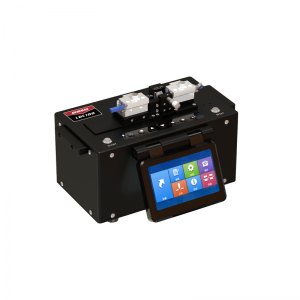
Mannaia per fibra ottica di grande diametro LDC-100 * Applicabile a fibre di diametro 80μm~600μm *Scanalatura a V della pompa del vuoto comoda per mettere la fibra *Lama durevole, durata più di 20000 volte *Archiviazione dati 4000 gruppi * Menu GUI intuitivo, facile da usare Di Più
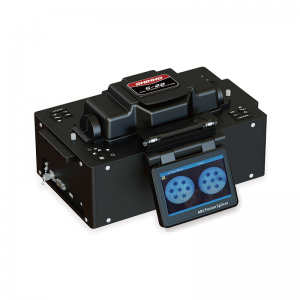
Giuntatrice a fusione in fibra multi-core S-22 La prima giuntatrice a fusione di fibra multi - core completamente automatica in Cina Di Più
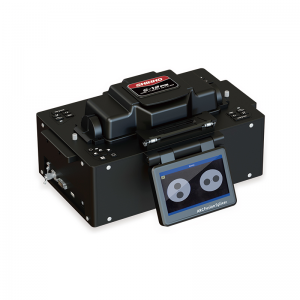
Polarizzazione di Mantenimento (PM) in Fibra di Fusion Splicer S-12 * Core a core di allineamento, bassa perdita di splicing * Endview e il Profilo di osservazione e di allineamento * Arco di calibrazione automatica e splicing * PM fibra di 45 e 90 gradi di allineamento Di Più
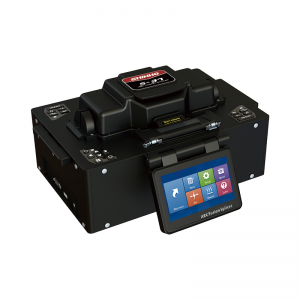
S-37 LDF Speialty Fiber Fusion Splicer SHINHO S-37 è l'ultimo modello che abbiamo sviluppato, potrebbe unire il diametro del rivestimento in fibra da 125 a 400 μm con una bassa perdita di giunzione. Abbiamo dotato la macchina di 3 diversi portafibra e 2 paia di elettrodi di ricambio. Di Più

splicer di fusione fibra core allineamento core x900 sei splicer di fusione per motori, vera tecnologia di allineamento core-core. 6 s splicing, 16s riscaldamento, identificare automaticamente i tipi di fibra. utilizzato per progetti wan / uomo / telecomunicazione. Di Più
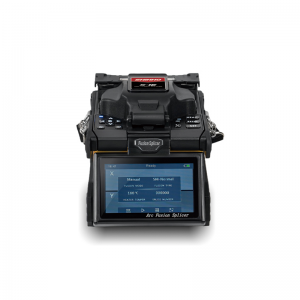
robusta giuntatrice per fusione ad arco multifunzione s16 design industriale robusto, anti-shock, a prova di polvere e impermeabile. supporto multifunzione per fibra nuda, patch cord, cavo di derivazione, ecc. splicing e riscaldamento rapidi, calibrazione automatica dell'arco. Di Più
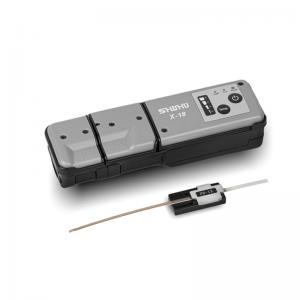
SHINHO X-18 Stripper termico in fibra di nastro Shinho X-18 Thermal Stripper è uno stripper termico manuale di nuova concezione, appositamente progettato per lo stripping termico non distruttivo della guaina di cavi a nastro fino a 12 fibre. Uno strumento buono e affidabile per il lavoro di giunzione della fibra del nastro. Di Più
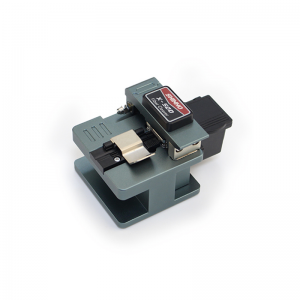
Mannaia per fibre ottiche ad alta precisione X-50D Di piccole dimensioni e leggero, facile da usare. Alta precisione e prestazioni stabili. Più di 48000 volte la durata della lama, lunghezza tagliata in fibra 5 ~ 20 mm. Materiale di alta qualità Di Più
From 400G to 1.6T: The Growing Importance of Fiber Optics in AI Data Centers
The rapid development of artificial intelligence (AI) is transforming the data center industry. As AI models become more complex, data centers require greater computing power and faster communication between servers, switches, and storage systems.
Optical fiber has become essential to this infrastructure. The evolution from 400G to 800G and 1.6T connectivity reflects the growing demand for higher bandwidth, lower latency, and improved energy efficiency.
Compared with traditional copper cables, optical fiber offers higher bandwidth, lower signal attenuation, and better resistance to electromagnetic interference. It also supports high-density connections within limited physical space.
These advantages make optical fiber particularly suitable for AI data centers, where thousands of GPUs and computing resources need to exchange massive amounts of data efficiently.
As AI computing clusters expand, data center networks are moving toward higher transmission speeds.
· 400G: An important solution for high-speed connections between servers and switches, providing greater network capacity.
· 800G: Supports larger AI clusters and increasingly demanding workloads, while placing greater emphasis on power consumption and thermal management.
· 1.6T: An emerging next-generation connectivity technology designed to meet the growing bandwidth requirements of future AI infrastructure.
This evolution involves not only faster transmission speeds but also improvements in optical transceivers, components, and network architecture.
Several technologies are driving the development of optical connectivity:
· Silicon Photonics: Integrates optical functions onto silicon platforms to improve integration and scalability.
· Co-Packaged Optics (CPO): Brings optical components closer to switching chips, potentially reducing power consumption.
· High-Density Fiber Connectivity: MPO/MTP connectors and multi-fiber cables support the increasing number of optical connections.
Reliable optical networks depend not only on advanced transceivers but also on the quality of fiber preparation, cutting, splicing, and testing.
As data center infrastructure becomes more sophisticated, precision fiber processing equipment plays an important role in optical cable manufacturing, network deployment, and optical component production.
The transition from 400G to 800G and 1.6T reflects the growing importance of optical communication in the AI era.
As computing demands continue to increase, optical fiber will remain a fundamental part of data center infrastructure. Advances in silicon photonics, CPO, and high-density connectivity will further shape the future of faster and more efficient optical networks.

benvenuto a registrare la newsletter se avete qualche interesse nei nostri prodotti, vi terremo informati delle nostre notizie, informazioni sui prodotti e promozioni se ce n'è.
© Copyright: SHINHO OPTICS LIMITED Tutti i diritti riservati.


 italiano
 English
 français
 русский
 español
 português
 العربية
 ไทย
 हिन्दी
 Indonesia
 中文